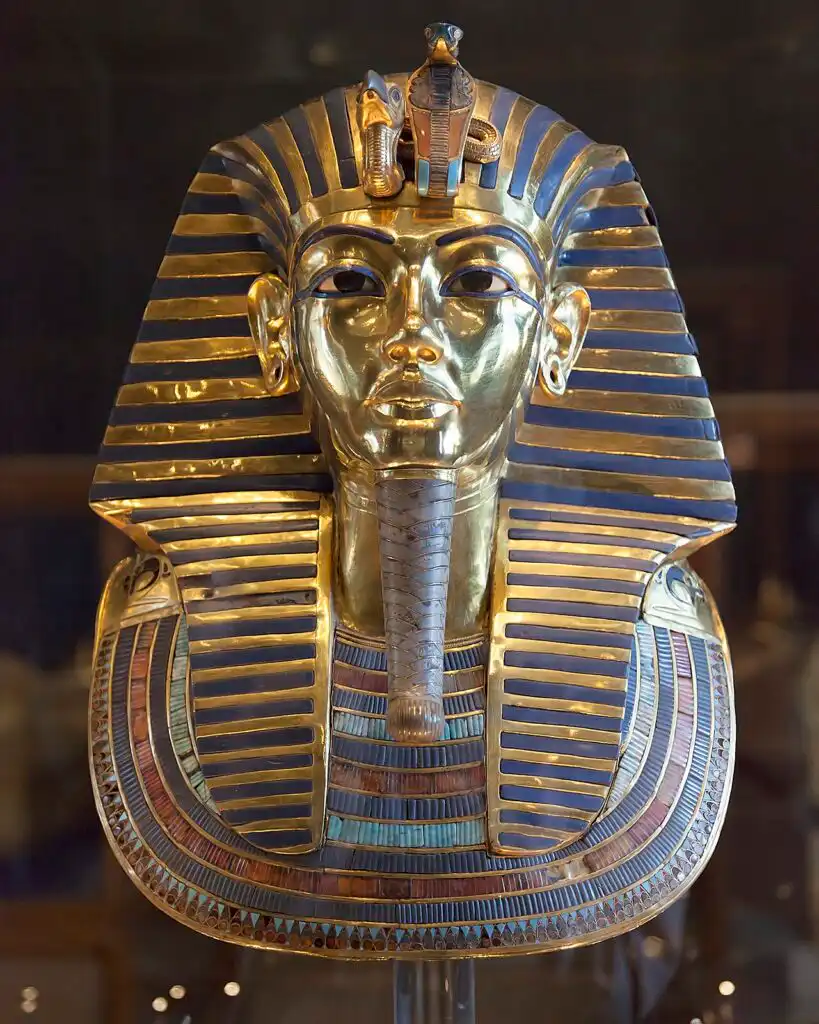
You’ve probably heard this one. In 1922, a team of archaeologists cracked open a sealed tomb in Egypt’s Valley of the Kings and found a boy king surrounded by treasure beyond anything anyone had ever seen. Then, one by one, the men who opened it started to die. A mosquito bite turned lethal. A canary was eaten by a cobra. A man dropped dead in his bed. The penalty, they said, for disturbing the sleep of a pharaoh.
It’s one of the great spooky stories of the last hundred years, and it has everything: buried gold, sudden death, and a curse reaching out from three thousand years ago. There’s only one small problem. The curse, as most of us picture it, wasn’t written down anywhere. We built it ourselves, and we did most of the building in a newspaper office.
What Was the Curse of King Tut Supposed to Say?
The famous curse, the one about death coming on wings to whoever opens the tomb, was never found in the tomb. That’s the part people tend to miss. There’s no inscription inside Tutankhamun’s burial chamber promising doom to grave robbers, and the Egyptologists who went looking for one came up empty. The Egyptologist Donald Redford was later asked about the whole business and called it “unadulterated claptrap,” which is about as politely as a scholar can say “nonsense.”
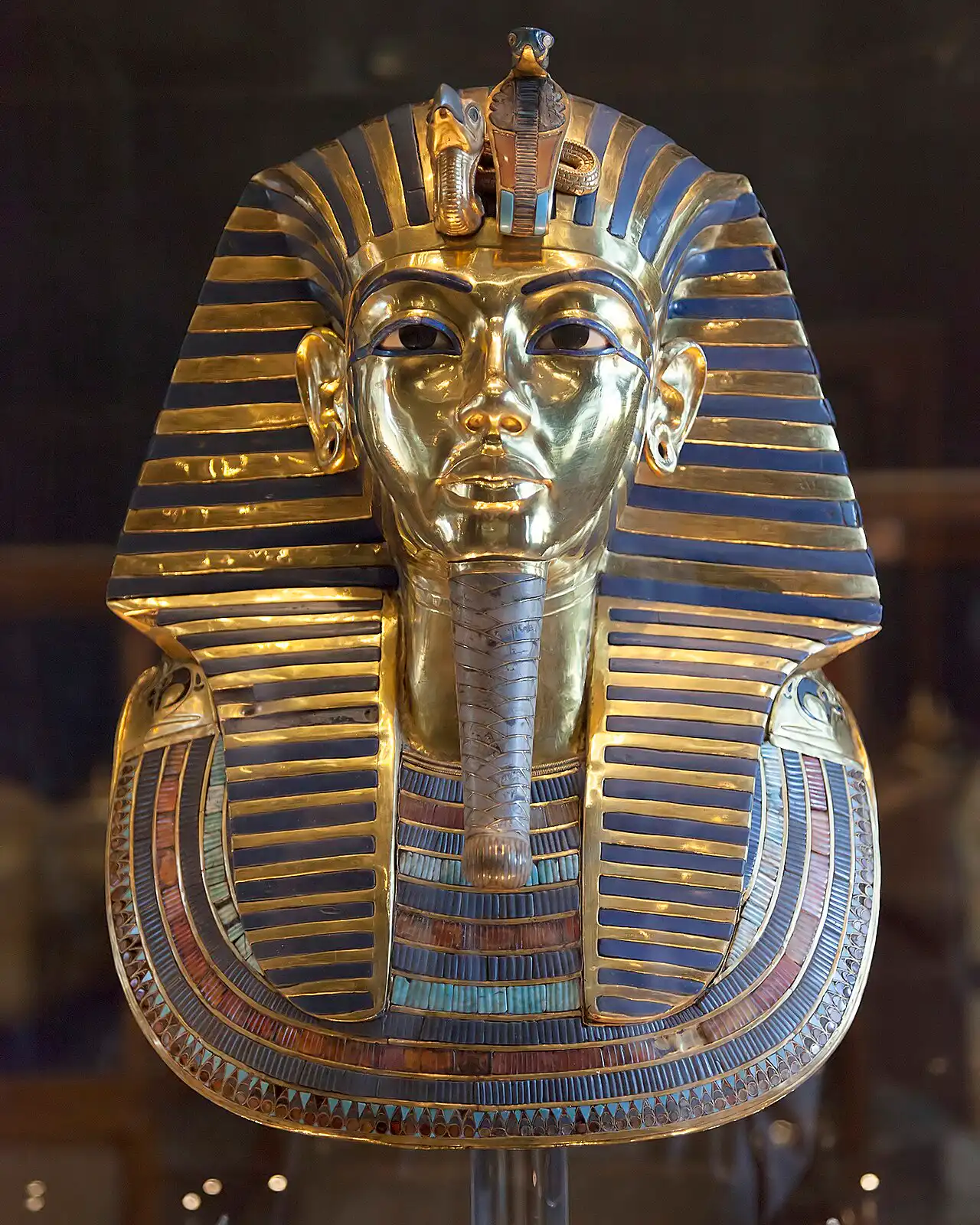
To be fair, the ancient Egyptians did sometimes carve warnings into tombs. A tomb could ask a local god to withhold blessings from anyone who defiled it, and one old pyramid text threatens a desecrator with a genuinely rough time, up to being “one who eats his own body.” So the idea of the tomb warning isn’t invented. It just wasn’t in this tomb. The tomb got a curse the way a full moon gets blamed for a strange night: not because anyone proved it, but because the idea was already lying around and a story needed a villain.
So Where Did the Curse Come From?
This is where the story gets fun, because the curse has an author, and she wrote fiction for a living.
The fuse was lit by a novelist named Marie Corelli, two weeks before the first man died. Corelli wrote an imaginative letter to a magazine, the New York World, in which she quoted an old book that supposedly warned “dire punishment” would follow anyone who broke into a sealed tomb. She was a novelist, and she was warming up a good scary idea. It worked better than she could’ve dreamed. When Lord Carnarvon, the wealthy man who had paid for the dig, died shortly afterwards, the newspapers had their hook, and a media frenzy followed. Reports went out that a curse had been found over the tomb door, which was simply not true. But it printed well, and by then, as you can imagine, nobody was checking.
People sometimes point to older fiction as the real source, and I think they’ve got a point. Louisa May Alcott, of all people, wrote a story in 1869 called Lost in a Pyramid, or The Mummy’s Curse, and a couple of earlier stories had similar ideas. So by the time Tutankhamun was found, the reading public already knew exactly what a mummy curse was supposed to look like… because they had read one.
Now Meet the Men Who Were Supposedly Cursed
Here’s the part that gets left out of the scary version, and it’s the bit where the whole legend starts to wobble.
The first death was not a lightning bolt. It was a shaving cut. Lord Carnarvon was bitten by a mosquito, and later nicked the bite with his razor. It became infected, the infection spread, and he died of blood poisoning in April 1923, a little over four months after the tomb was opened. An article in the medical journal The Lancet later went through his case and found nothing supernatural in it at all. The man had been prone to severe lung trouble, and his system was in no shape to fight off an infection. A modern hospital would’ve had a fair shot at saving him. The curse just had better publicity.
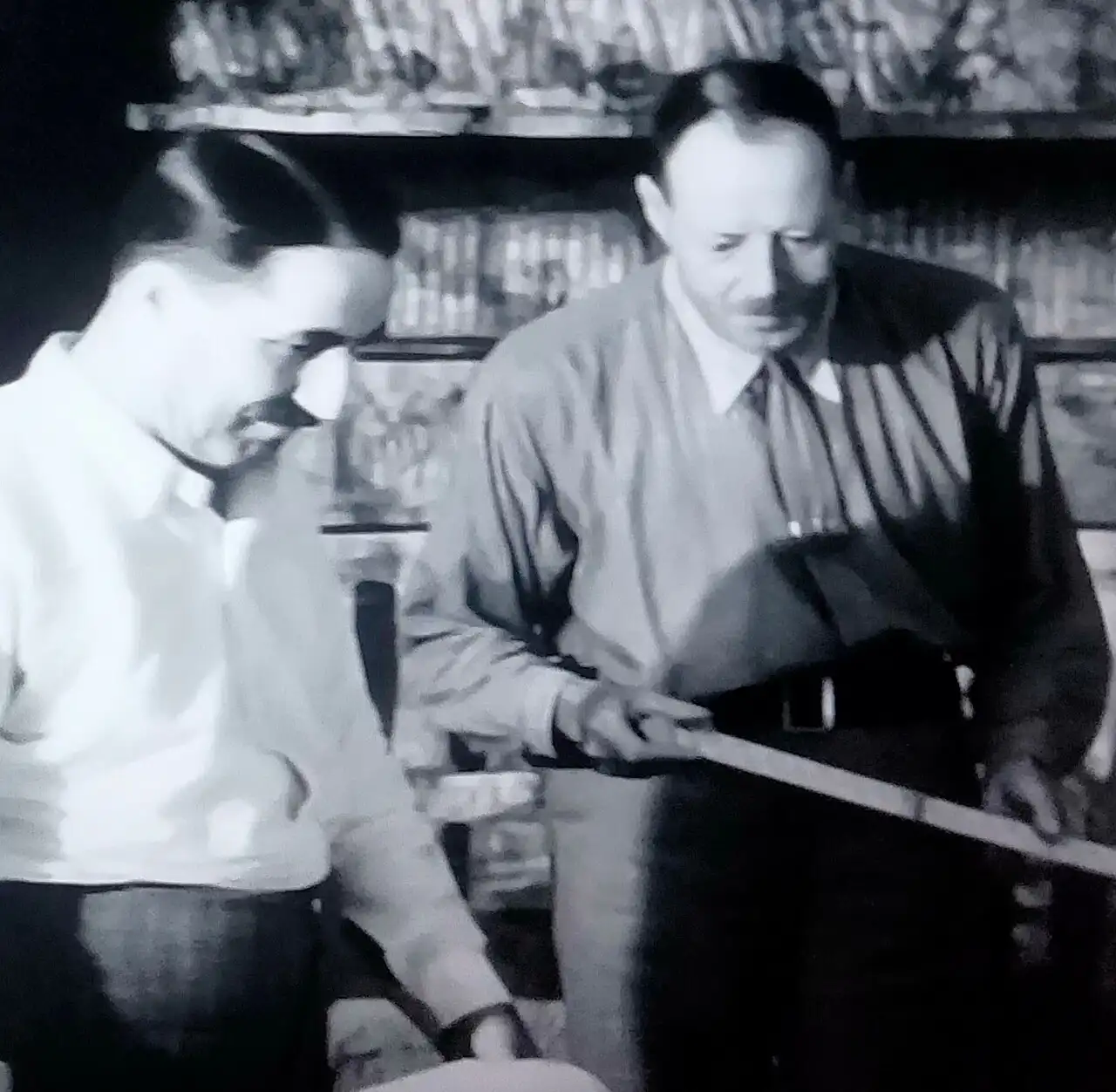
The rest of the roll call is even less dramatic, and I promise I’m not cherry-picking. George Jay Gould, a visitor, caught a fever. Sir Archibald Douglas-Reid, who x-rayed the mummy, died of cancer related to his own career in radiology, back when nobody wore protection. One man was found dead of suspected natural causes in his club. And Howard Carter, the man who actually opened the tomb, the one you’d expect to be first against the wall, lived another sixteen years and died at home in London at 64.
The Sherlock Holmes Man Blamed Invisible Spirits
If you want a genuinely funny detail to bring up at your next dinner party, you’ve come to the right paragraph. Honestly, this is my favorite part of the whole story.
Arthur Conan Doyle, the man who invented Sherlock Holmes, seriously suggested the curse was real, carried out by “elementals.” Doyle, who had become a committed spiritualist, believed that Tutankhamun’s priests had conjured up invisible spirit guardians to protect the tomb. So the creator of the most rational detective in fiction ended up arguing for magic ghosts, while the actual archaeologists rolled their eyes. You couldn’t make it up! It’s not the ending anyone would’ve written for him, and I’ll admit I find it a little delightful.
The Two Coincidences That Made It Stick
I’ll be fair to the legend here, though, because there were two moments that genuinely raise the hairs a little, and without them you and I wouldn’t be talking about any of this.
One: a man promised Carnarvon six weeks of life, and got it almost exactly right. The Egyptologist Arthur Weigall, standing in the crowd as Carnarvon entered the tomb, is reported to have turned to a reporter and said, “I give him six weeks to live.” Carnarvon died about six weeks later. That sounds uncanny… until you remember the man was a journalist’s dream, the line was famously convenient, and the whole point of saying it was that it’d look good in print. And it did, didn’t it?
Two: Carter’s pet canary was eaten by a cobra. Before the tomb was opened, Carter kept a canary, and a cobra got into the cage and swallowed it. A cobra was the symbol worn on the pharaoh’s forehead to strike his enemies, and the locals took the dead bird as a sign that the royal snake had come for the intruders. It’s a great story, and it doesn’t hurt that it happens to be true.
What the Numbers Actually Show
Then you count heads, and the goosebumps cool off fast. I did, and here’s what I found.
Of the 58 people present when the tomb and sarcophagus were opened, only eight died within a dozen years. The other 50 carried on with their lives. Lady Evelyn Herbert, the earl’s daughter and one of the first people ever to climb into the burial chamber, lived another 57 years and died in 1980. If the curse was looking for someone, you’d have to say it was a lousy shot. And remember, by 1923 people were only just beginning to live long enough for a “premature” death to really stand out. People died young all the time; the newspapers just never printed it as a curse.
Scientists have offered their own theories since, and none of them need a ghost. One is a toxic fungus, Aspergillus flavus, that can grow in the organic muck of an old tomb and bother the lungs of a visitor. It’s a tidy idea, and it did get connected to other tomb openings, but The Lancet looked at Carnarvon’s case and found it didn’t fit. There’s no solid evidence a poison in the air finished him off.
Why We Keep Believing It Anyway
Because the story is better than the truth, and we are suckers for a story. That’s the whole trick, and you can watch it working in real time. A curse makes a real event mean something. It turns a mosquito, a razor, and a bad immune system into ancient justice. It gives the treasure a price. And it is exactly the sort of thing this site keeps running into: a tale everyone repeats because it landed at the right moment, and the retelling sanded off the boring parts.
You can see the same machinery at work in every legend of a lost city or a monster in a lake. We don’t adopt the version with the missing evidence. We adopt the version with the shiver in it, every time.
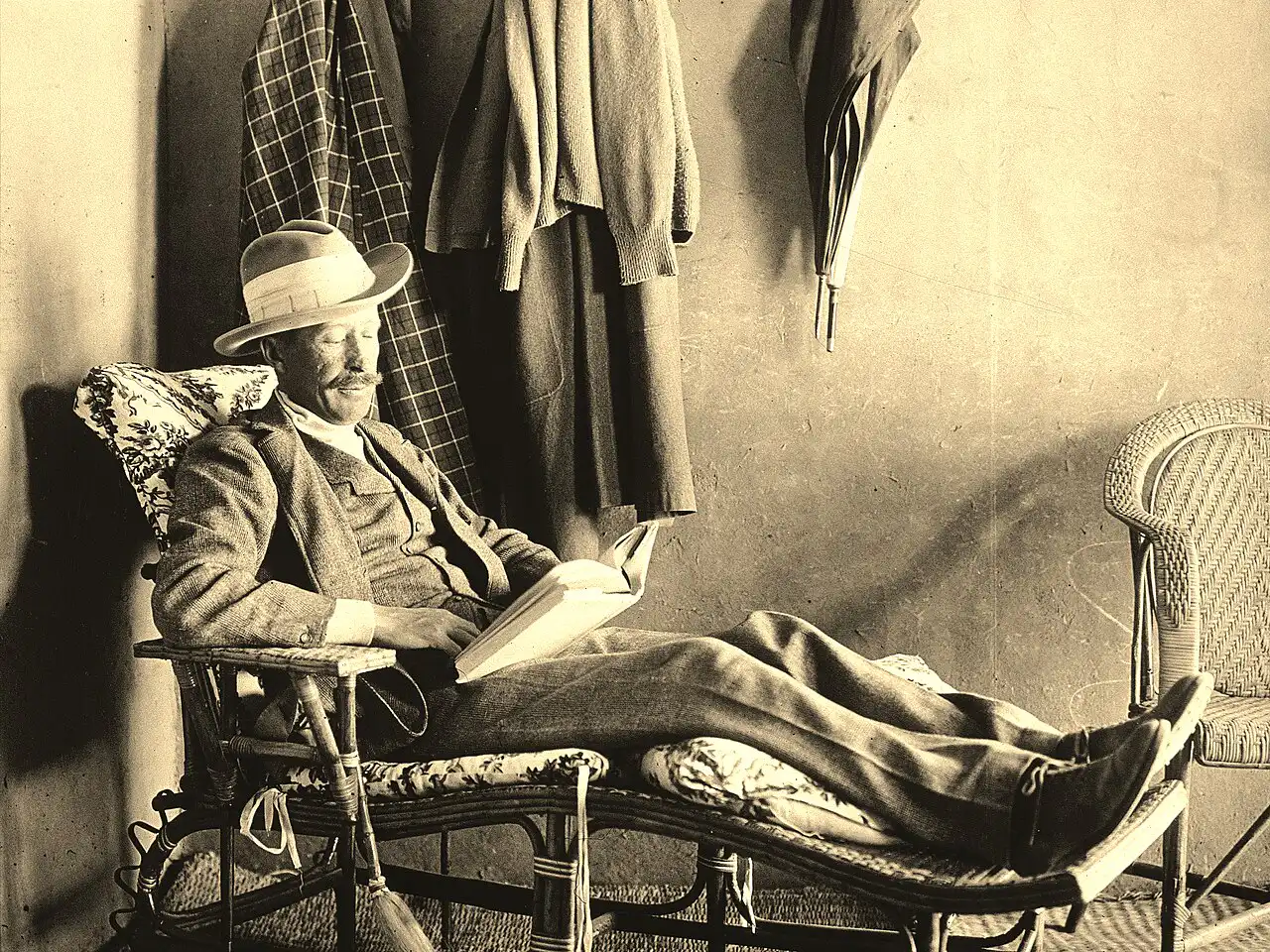
The mild-mannered Howard Carter, who actually opened the tomb, had the most sensible reaction of anyone. He dismissed the whole curse as “tommy-rot,” and he outlived the legend by more than a decade. Meanwhile the most popular mummy stories, like the ones that made Universal Pictures a fortune, were already in cinemas by the 1930s, feeding a fire the newspapers had lit a few years earlier.
So, Was King Tut’s Curse Real or Not?
Here’s my honest read. There was no curse in the tomb. There was a novelist who lobbed a scary idea into the air, and a grieving, superstitious world that was ready to catch it. The two true coincidences, the six-week remark and the canary, were enough for the story to take on a life of its own, and the press did the rest. Everything since has just been drag.
Which means the curse of the pharaohs is a hoax we handed down to ourselves, and a very good one, since it’s roughly a hundred years old now and showing no signs of fading. Put it in a museum and it’d be behind glass by now.
And here’s a thought to leave you with. We like to think we’ve outgrown this kind of thing, that a story this thin would never fool a modern audience like us. But the exact same recipe, one real shiver wrapped around a heap of missing evidence, still works on us every single week. So when that mummy shuffles across the screen in some late-night movie, ask yourself the slightly uncomfortable question. Are we finally immune to a good curse… or are we just better at enjoying being fooled? I know which way I lean.