It happens every October. You notice a spider in the corner of the bathroom, and then another by the front door, and then a big one sprinting across the living room carpet like it’s got somewhere important to be. Nothing’s changed about the house. Nothing’s changed about you. And yet, for a few weeks every autumn, the spiders seem to have decided that your home is the place to be.
I used to assume they were coming in to escape the cold, which is what almost everyone says. The real answer, it turns out, is stranger and more interesting than the cold. It also gave me a whole new appreciation for the spiders I used to sweep out the door. So let’s dig into it. Why do they really come in, and what did our grandparents believe about the ones that did?
Why Do Spiders Come Inside in Autumn?
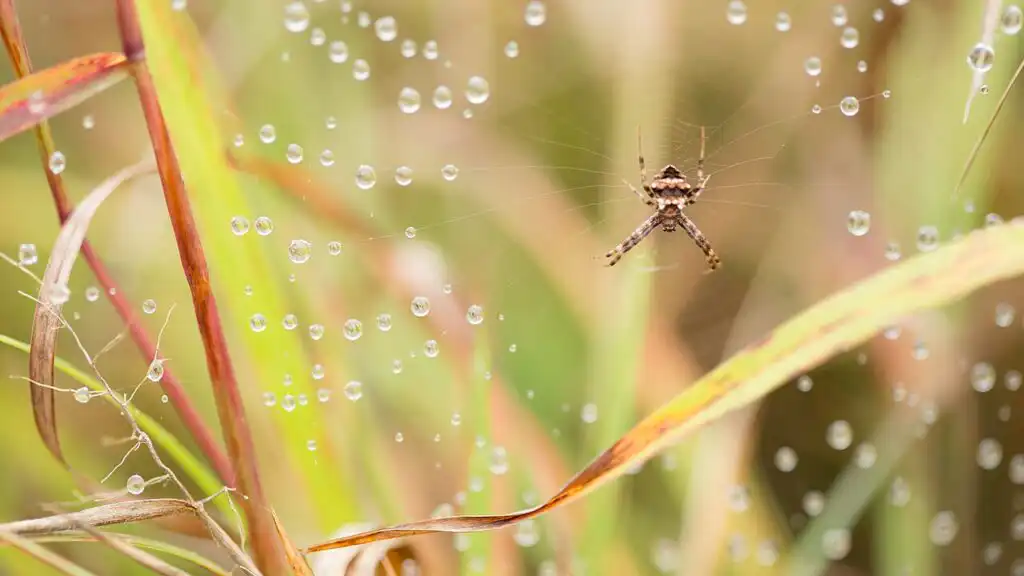
For the males of many species, autumn is not about warmth at all. It’s about romance, and the search for a mate sends them wandering into places they would normally ignore. Most spiders you meet indoors are males that have reached sexual maturity and are striking out in search of females, and that wandering peaks in late summer and early autumn. The arachnologists at the Burke Museum in Seattle put it bluntly: the seasonal spike lines up with the species’ mating season and the movement of mature males, which happens before the weather turns genuinely cold.
Here is the part that surprised me most. The little spiders living in the corners of your house tend to belong to their own set of indoor-adapted species, distinct from the ones you meet in the garden. They’re a small group of species that have adapted to life indoors, and the Burke Museum notes that fewer than five percent of the spiders you see inside have ever been outdoors at all. They aren’t refugees from the cold. They’re residents you simply haven’t noticed until one of them went looking for a partner and walked across your floor.
The older explanation isn’t entirely wrong, though. Pest control and university extension guides do say spiders wander indoors more in autumn, sometimes for shelter. The Burke Museum calls the cold-weather story a myth and points out that spiders are cold-blooded and not drawn to warmth, and that any North American spider needing a heated house to survive winter would have died out long before people arrived. The mating season is the main event here, and the shelter story is a smaller, secondary effect. The two often get muddled together.
Did you Know?
Spider silk is, weight for weight, stronger than steel, and tougher than both steel and Kevlar. The toughest known silk comes from Darwin’s bark spider, which spins a thread more than ten times tougher than the body armor material and uses it to build webs spanning entire rivers.
The Old Rhyme About Letting Them Live
Long before anyone studied spiders, people had a rhyme warning them not to squash one, and it is an old Kentish proverb, recorded in the 1800s, that runs: “If you wish to live and thrive, let the spider run alive.” It shows up in a popular science essay from 1897 on spiders and their ways, attributed to the old county wisdom of Kent. The idea behind it is that killing a spider invites bad luck, a belief collected from ordinary people by folklorists in the 1880s, one of whom wrote that he didn’t know how widespread it was but that several people had told him killing a spider meant ill fortune.
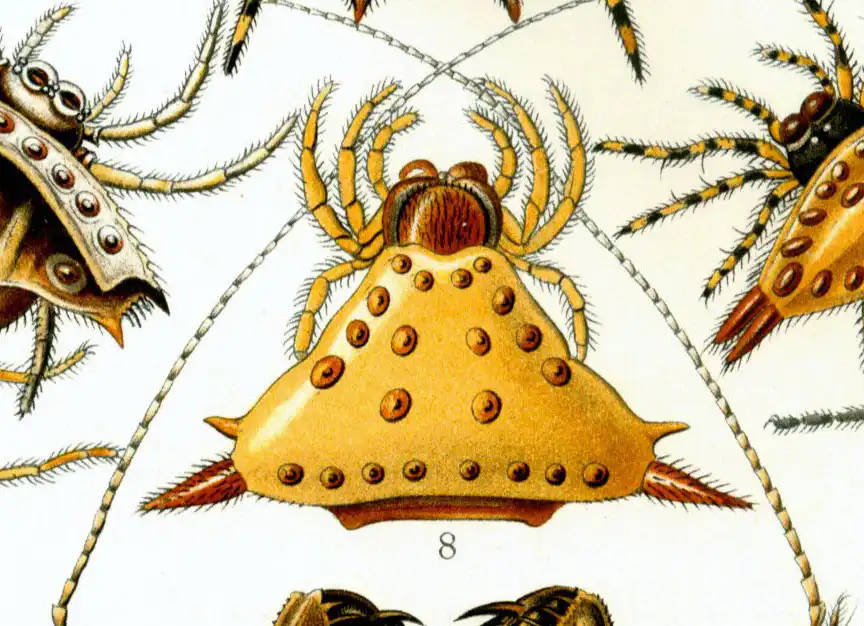
The familiar belief that killing a spider brings rain belongs to the daddy longlegs, at least to the best of my knowledge, and they aren’t actually spiders at all. Children in Massachusetts in the 1880s were recorded saying that killing one would bring rain the next day. The rain idea is real, but it isn’t really about spiders, so I wouldn’t attach it to them.
What I can stand behind is the money connection, though it’s thin. The same instinct to see fortune in small creatures shows up in our post on lucky charms and horseshoes. In Britain, Ireland, and several other English-speaking countries, the small sheet-web spiders of the family Linyphiidae are called money spiders, and there’s a genuine superstition that they bring financial luck. That’s likely where the vague modern idea that seeing a spider means money is coming comes from. It’s a naming tradition rather than a deep myth, but it’s real.
Spiders in Folklore Around the World
Few creatures have been woven into stories as thoroughly as the spider, and almost every culture has found a different meaning in it. If you only know spiders as something to fear, the range of what people have seen in them is genuinely eye-opening:
- The Greek myth of Arachne, told by the Roman poet Ovid, explains the spider as a punished weaver. Arachne boasted she could out-weave the goddess Athena, lost her nerve and hung herself in shame, and was transformed into a spider doomed to weave forever. The Greek word for spider gives us the scientific name for the whole class, Arachnida.
- In West African Ashanti tradition, Anansi is a spider trickster whose tales were so central to the culture that the word for them, Anansesem, came to mean any fable at all. The character traveled across the Atlantic with the slave trade and survived as Aunt Nancy in the Caribbean.
- The Hopi people tell of Spider Grandmother, who thought the world into being by weaving her webs, while the Navajo honor a Spider Woman as a protector and helper of people. In these traditions the spider is a creator, not a monster.
- Scottish legend has Robert the Bruce hiding in a cave, watching a spider fail again and again to climb its thread before finally succeeding. He took it as a sign to keep fighting, which is where the saying about trying, trying again comes from.
- In Muslim tradition, a spider is said to have spun a web across the mouth of the Cave of Thawr to hide the Prophet Muhammad and Abu Bakr from pursuers, who assumed no one could have entered without breaking the web. A nearly identical story is told in Jewish tradition about David hiding from Saul.
Across all of that, one thread keeps showing up: patience. The spider sits still and works, and the world eventually comes to it. That’s a very different picture from the shrieking movie version we’ve inherited.
Are the Spiders in Your House Dangerous?
Almost certainly not. Spiders in the United States come in thousands of species, and the overwhelming majority don’t pose a threat to people at all. University extension guides are blunt about it: most spiders are harmless and often physically incapable of biting a person, even if you provoke them. Only two groups in North America cause serious harm, the black widow and the brown recluse, and neither is the sort of spider that’s casually sprinting across your carpet in October.
And there is a whole stranger side to spiders than the ones in your hallway: elsewhere on the site we have the zombie spiders that come back to life. The species you’re most likely to meet indoors are the common house spider, a small brown cobweb weaver that lives around buildings worldwide, and, if you’re unlucky, the domestic house spider or the giant house spider, which look alarming and run fast but whose bites don’t threaten people. The noble false widow, a species that has spread around the world from Madeira and the Canary Islands, has a reputation for a nasty bite, but even that’s usually described as being like a bee or wasp sting.
And the harmless ones are doing you a favor. Spiders eat enormous numbers of insects, including the household pests you would rather not have, which is one more reason the old rhyme about letting them run alive makes practical sense as well as superstitious sense. If you want to move one outside for your own peace of mind, that’s fine, but try not to lose sleep over the ones you miss.
Why Some of Us Are Afraid of Them
Between roughly three and six percent of people have a genuine fear of spiders, which makes it one of the most common specific phobias there is. Researchers argue about why. One camp thinks the fear is partly evolved, an instinct passed down from ancestors who had good reason to be wary of venomous bites. That whole business of which animals we fear, and why, runs through our look at whether the full moon really makes people act strangely. The other camp points out that most spiders can’t hurt us, that people happily eat spiders in parts of Papua New Guinea and Cambodia, and that our fear is more likely learned and cultural, fed by scary films and the way adults react around children. Researchers still argue about it, and the question is genuinely open.
One thing does stand out, though: the fear doesn’t match the danger. We’ve built an entire horror tradition on the least threatening behavior of an animal whose real business is eating flies and being patient. I’d say that mismatch is worth holding onto the next time one catches you off guard.
Wrapping Up
The spider crossing your floor this autumn is most likely a male on the most important journey of his short life, looking for a mate, and he is far more interested in that than in you. The spiders tucked into your corners have probably never been outside, and they’re quietly doing pest control while you sleep. Our ancestors, watching the same behavior, decided the spider deserved to be read as a sign, whether of luck, of money, or of sheer persistence, and wrote rhymes asking us to leave it alone. The science and the folk wisdom point in the same direction here, which doesn’t happen often.
Thank you for reading this post today. I hope it settled a question you had never quite gotten around to asking. It’s worth asking the next time one scurries past you: knowing the spider in your house is probably harmless, probably useful, and probably on its way to meet someone, does it change how you feel about letting it run alive?