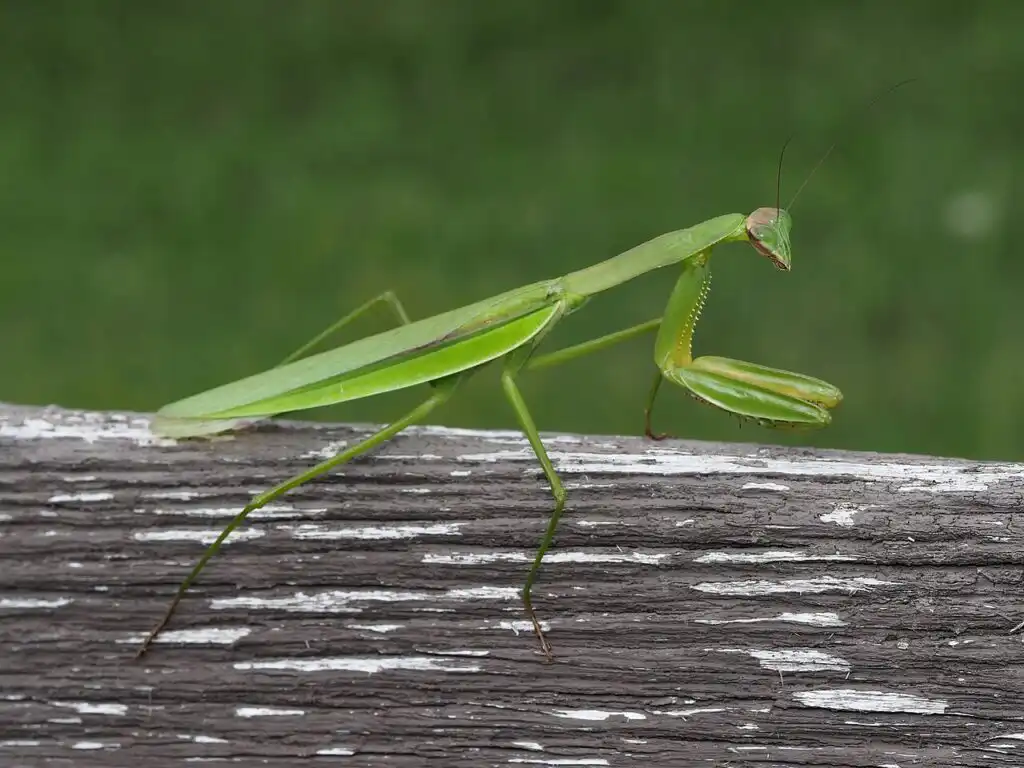
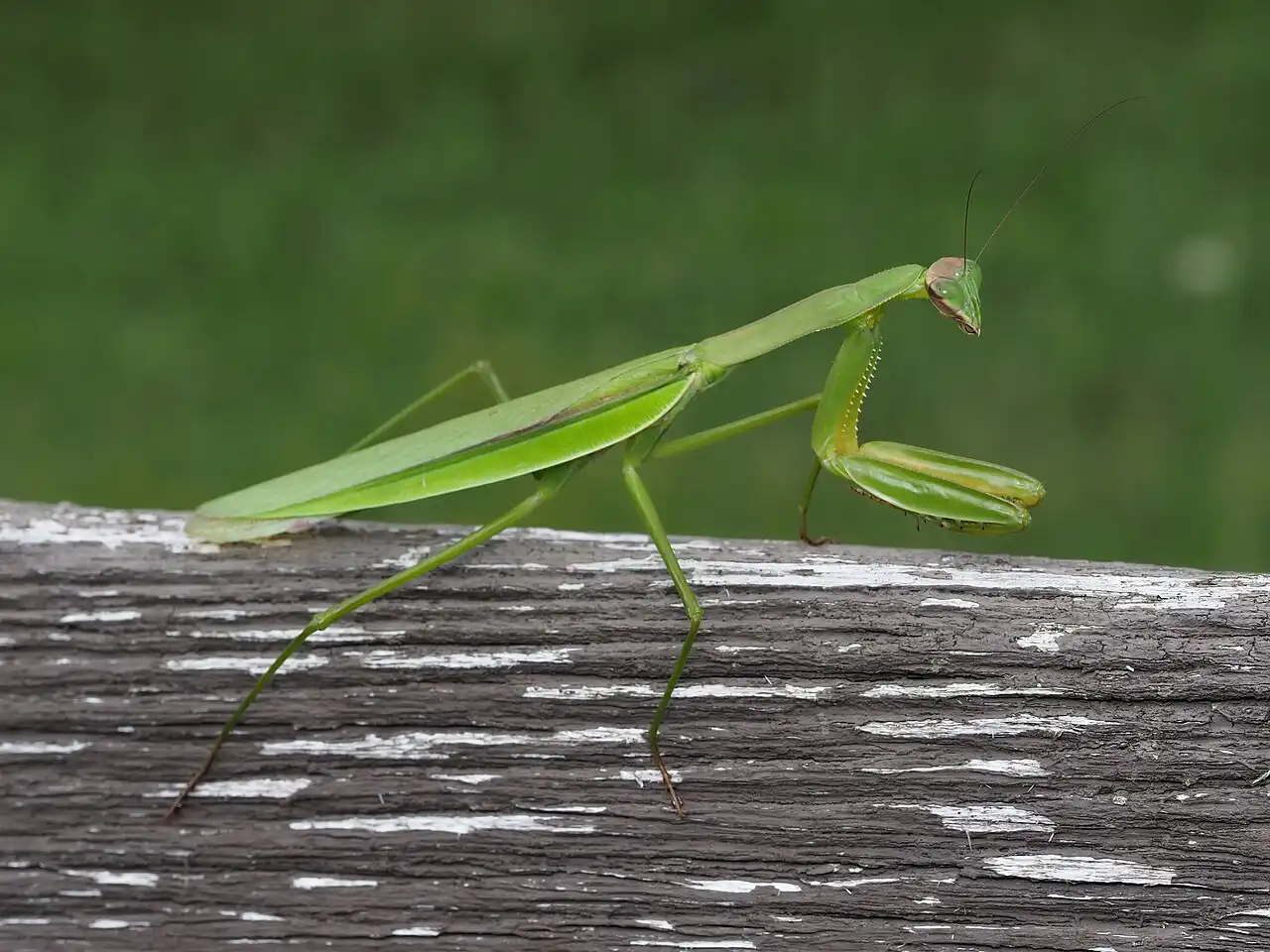
You find it on a fence post or a sunflower, perfectly still, front legs folded together under its chin, and it stares back at you with those enormous eyes as if it’s weighing up your soul. Everything about a praying mantis looks deliberate. It looks like it knows something. And that impression, more than anything the insect actually does, is what turned a patient hunter into one of the most mythologized creatures in the world.
So here’s the question a lot of people have, usually after spotting one in the garden: should you kill a praying mantis? You may have heard it’s illegal, or that it brings bad luck, or that it’s a sacred messenger. Only one of those has any truth in it, and it isn’t the one you’d expect… Let’s sort them out.
Is It Illegal to Kill a Praying Mantis?
No. That one is a myth, and a stubborn one. You might have been told, probably with great confidence, that it’s a federal offense to harm a praying mantis in the United States. It isn’t. Mantises aren’t federally protected, and the two species most commonly seen in North America, the Chinese mantis and the European mantis, were actually introduced there on purpose as pest control. You can’t really be prosecuted for killing a creature your own country imported to eat the bugs.
Where the myth probably comes from is a bit of truth wearing a costume. The added complication is that those introduced mantises aren’t even very good at the job they were imported for, because they eat anything they can catch, helpful insects included, rather than specializing in pests. So the “protected sacred insect” story is doing a lot of work that the actual regulation doesn’t back up.
Why Is the Mantis Called a Prophet?
Because its name literally means one, and people have read omens in its posture for thousands of years. “Mantis” comes from a Greek word for a prophet or diviner, and the idea is that those folded front legs look like a seer lost in concentration. The tenth-century Byzantine encyclopedia known as the Suda described the insect and noted that some people watched its movements to tell the future. It’s one of the oldest recorded pieces of insect superstition there is, and it’s built entirely on a mistaken reading of the pose.
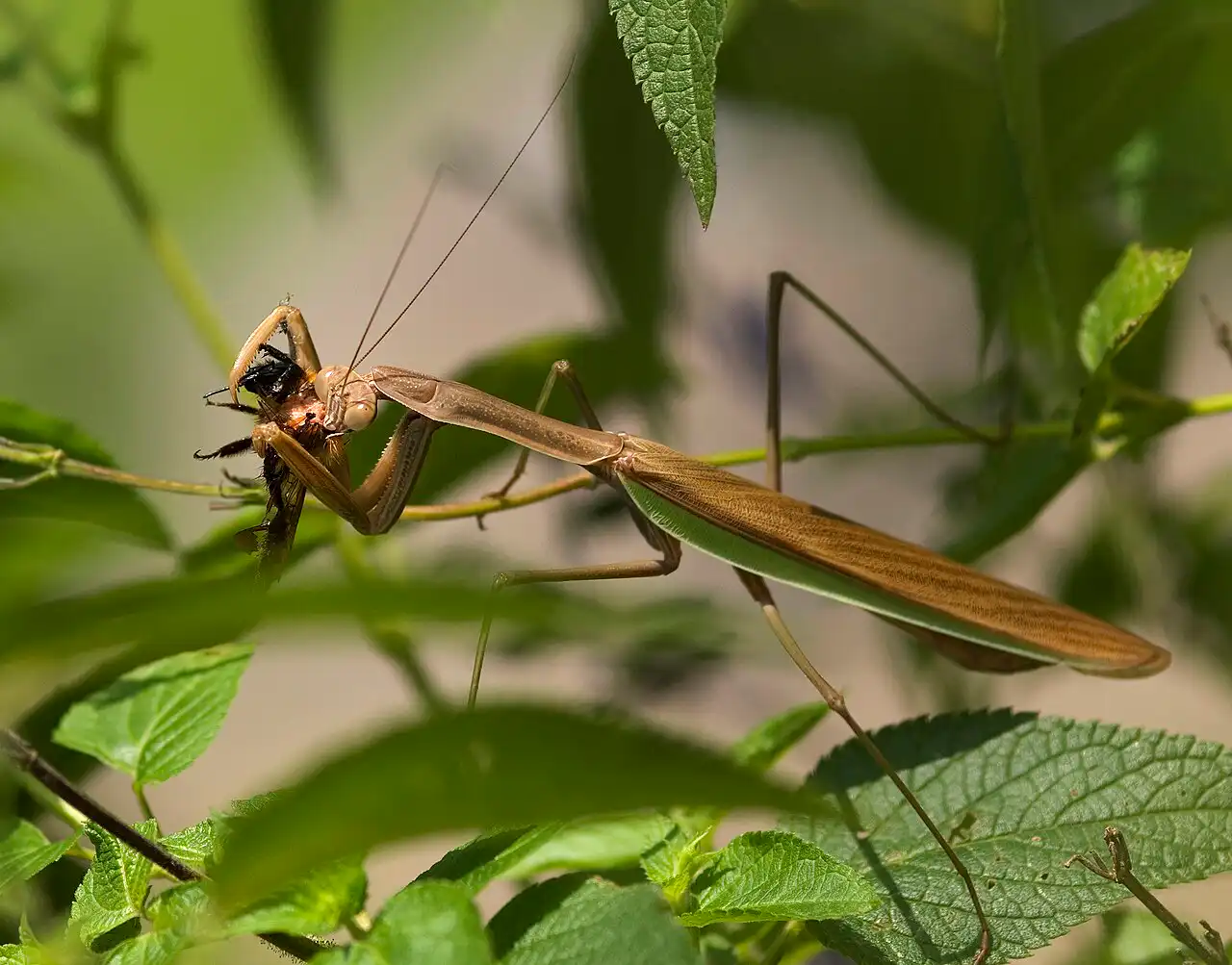
The pose isn’t prayer and it isn’t divination. It’s an ambush stance. A mantis holds its front legs folded because it’s waiting for something to come within reach, and the moment it does, those legs snap out and close like a trap. Every calm, contemplative-looking mantis you’ve ever seen was, in fact, mid-hunt. The mystique is a case of an animal being given a personality it never asked for, and honestly doing nothing to correct it. It’s the same gift for accidental symbolism that handed the household cat a whole mythology it never asked for.
The Mantis That Made the First Human
In southern Africa the mantis is a god, and one of the most important figures in a whole creation tradition. The Khoi and San peoples revered it so highly that the early European settlers’ Afrikaans dubbed it the Hottentotsgot, “the god of the Hottentots”. For the San, the mantis is one form of the trickster deity Kaggen, who could also appear as a snake, a hare, or a vulture, and who appears throughout their stories as a creator and troublemaker in equal measure.
One Kalahari creation myth is particularly beautiful. A bee carried a mantis across a river and, exhausted, left it on a floating flower. Before the bee died, it planted a seed in the mantis’s body, and from that seed grew the first human. It’s a story that treats the mantis as the vessel of our beginning, which is about as far from “garden pest” as it’s possible to get.
Do Mantises Really Always Eat Their Mates?
Sometimes, but the famous man-eating reputation is a big exaggeration, and the sources say so plainly. The image of the female mantis biting the male’s head off mid-mating is one of the most quoted “facts” in the insect world, and it does happen, in some species, some of the time, often in captivity where the male can’t escape. But it is not the universal ritual the cartoons suggest. The standard reference on common misconceptions states it flatly: the female does not always kill and eat the male during mating.
The trope got its grip because it’s dramatic and it fits the femme fatale archetype people love to project onto nature. It’s telling that one of the mantis’s most famous appearances is Aldous Huxley’s 1962 novel Island, where two mantises mating becomes the backdrop for a long philosophical discussion of death. We keep using the mantis as a mirror for our own ideas about love and danger, and the insect just keeps folding its legs and waiting.
A Mantis With an Impossible Résumé
When you line up the mantis’s appearances, it’s clear this insect has been everywhere. It’s on fifth-century BC silver coins from Metapontum in southern Italy, shown accurately in its threat posture. It’s in the ancient Chinese dictionary the Erya, where it stood for courage and fearlessness, and it gave its name to two Chinese martial arts styles, the Northern and Southern Praying Mantis. It turns up as a motif on pre-Columbian pottery in Nicaragua, believed to represent a spirit called “Madre Culebra”.
More recently it became a 1957 science-fiction monster in The Deadly Mantis, and a giant one appears in an M. C. Escher woodcut called Dream, perched on a sleeping bishop. Gerald Durrell gave a mantis named Cicely a four-page battle scene against a gecko in his 1956 memoir My Family and Other Animals. Coins, martial arts, creation myths, monster movies and a woodcut by one of the great graphic artists of the twentieth century. The praying mantis has had what can only be described as a very full career.
There’s a ninth-century BC list of locust-like insects from Nineveh that gives the mantis two names: “necromancer” and “soothsayer”. It’s nearly three thousand years old, and it’s a direct ancestor of the “praying prophet” idea we still attach to the insect today.
So, Should You Leave It Alone?
There’s no law stopping you, but there’s rarely a reason to bother it either. If you have a mantis in the garden, it will happily help itself to a range of insects, some of which you’ll be glad to see gone. It won’t hurt you, it won’t move indoors, and it’ll be gone within a few weeks anyway. A creature that has played prophet and monster across three thousand years deserves at least to finish its season undisturbed.
What stays with me is the gap between what the mantis is and what we’ve made of it. It’s a sit-and-wait predator with excellent eyesight and no opinion about anything. We looked at it and saw a priest, a prophet, a widow, a monster… I don’t think the mantis minds either way, but I do think it tells us we can’t quite help turning other creatures into stories about ourselves. One landing on you has a way of making that old instinct to keep still and watch kick back in.