Put yourself in his shoes for a second. You’re in Hiroshima on business, walking toward the docks on a bright August morning, and the sky splits open. You survive it, somehow. You spend the night in a shelter, crawl onto a train the next day, and go home to Nagasaki. Three days later, you’re standing in your office, bandaged and half deaf, telling your boss the city is gone. And that’s the exact moment the second bomb falls.
That sounds like a movie plot. It is the life of one man, Tsutomu Yamaguchi, and the reason his story sounds impossible is that the odds against it are almost absurd. Yet when you line up the dates, it holds together perfectly.
Let’s walk through it, because the details are almost stranger than the headline.
Who Was Tsutomu Yamaguchi?
He was a Japanese marine engineer who survived both the Hiroshima and Nagasaki atomic bombings, and he is the only person the Japanese government has ever officially recognized as a double survivor. Roughly 160 people are believed to have been caught in both blasts, but only Yamaguchi’s status was ever formally confirmed.
He was born in Nagasaki in 1916 and worked for Mitsubishi Heavy Industries as a draftsman designing oil tankers. In the summer of 1945, his job sent him to Hiroshima for a three-month stint. He was a company man, doing a company errand, in the wrong city at the wrong time… and then in the other wrong city three days later.
What Happened on August 6, 1945?
Yamaguchi was about two miles from ground zero when the Hiroshima bomb detonated, and he saw it happen. He was heading for the railway with two colleagues when he realized he had left his hanko, the personal identity stamp every Japanese worker needed, back at the office. So he turned around to fetch it.
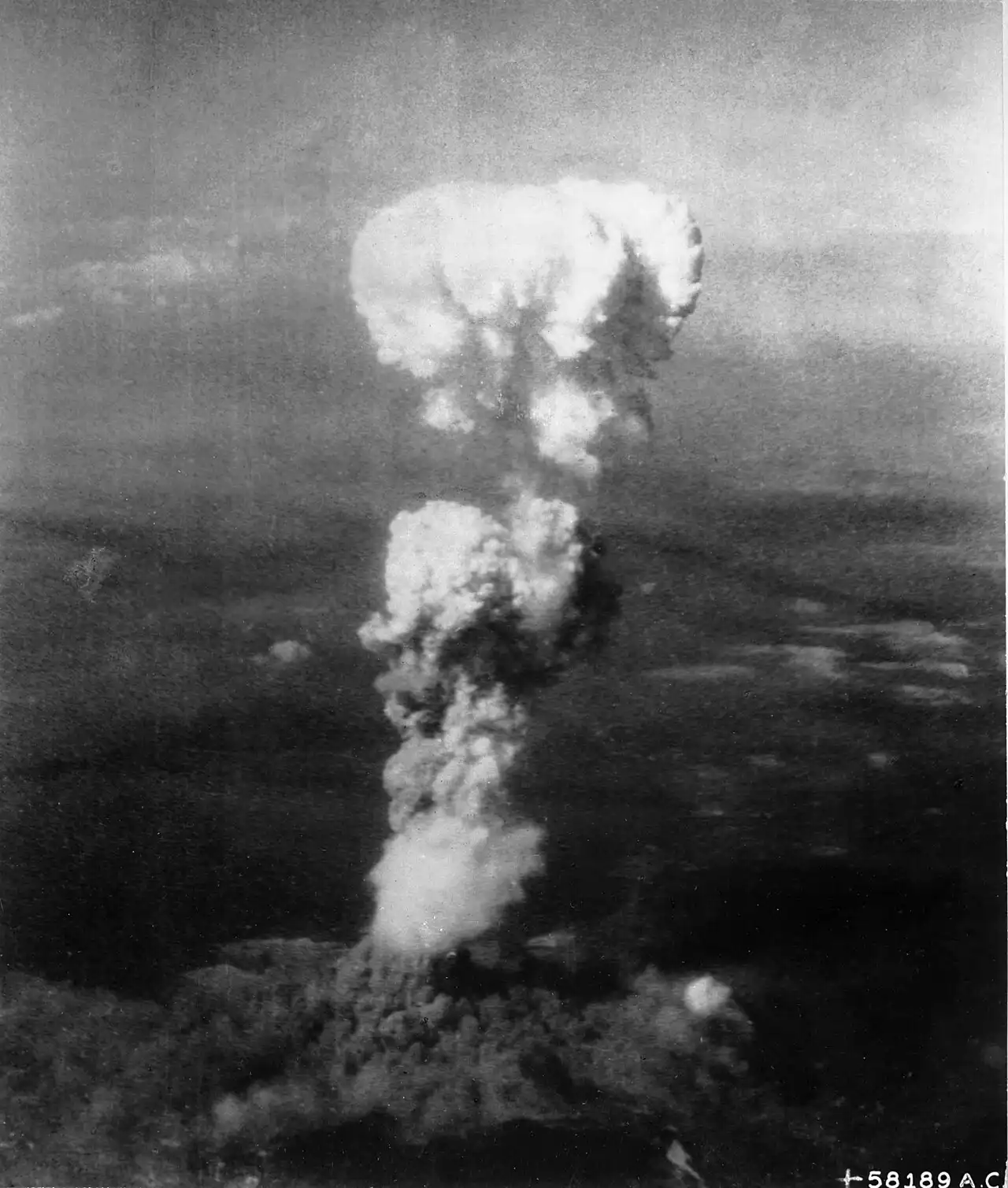
That little detour is the hinge of the entire story. Because of a forgotten stamp, he was still in the city at 8:15 in the morning when the Enola Gay released the bomb called Little Boy, about three kilometers away.
He later recalled seeing the plane and two small parachutes, then “a great flash in the sky, and I was blown over.” The blast burst his eardrums, blinded him for a while, and left the upper-left side of his body badly scorched. He lost the hearing in his left ear for good.
After the shock passed, he crawled to a shelter and rested. Then he went looking for his colleagues. He found them, and remarkably, all three were alive. They sheltered overnight and set off for Nagasaki the following morning.
He Goes Straight Back to Work?
Even though he was badly hurt, he reported for his shift anyway. That’s the part I keep circling back to. He arrived in Nagasaki with serious burns, wrapped in bandages, and on the morning of August 9 he went in to the office.
Think about what that says about him, and about the era. He had just watched one city vanish. His body was wrecked. And his instinct was to show up and explain to his supervisor what he had seen. Whatever else you call Tsutomu Yamaguchi, you can’t call him a quitter.
So far, the man had survived a nuclear blast and kept functioning. If you have ever wondered how people endure the genuinely unthinkable, stories like the most extreme survival situations tend to share that same stubborn refusal to stop.
What Happened on August 9, 1945?
He was describing the Hiroshima blast to his boss when the Nagasaki bomb went off. His supervisor had listened to his account and told him he was crazy, that one bomb could not possibly have destroyed an entire city. Yamaguchi was mid-explanation when the room lit up.
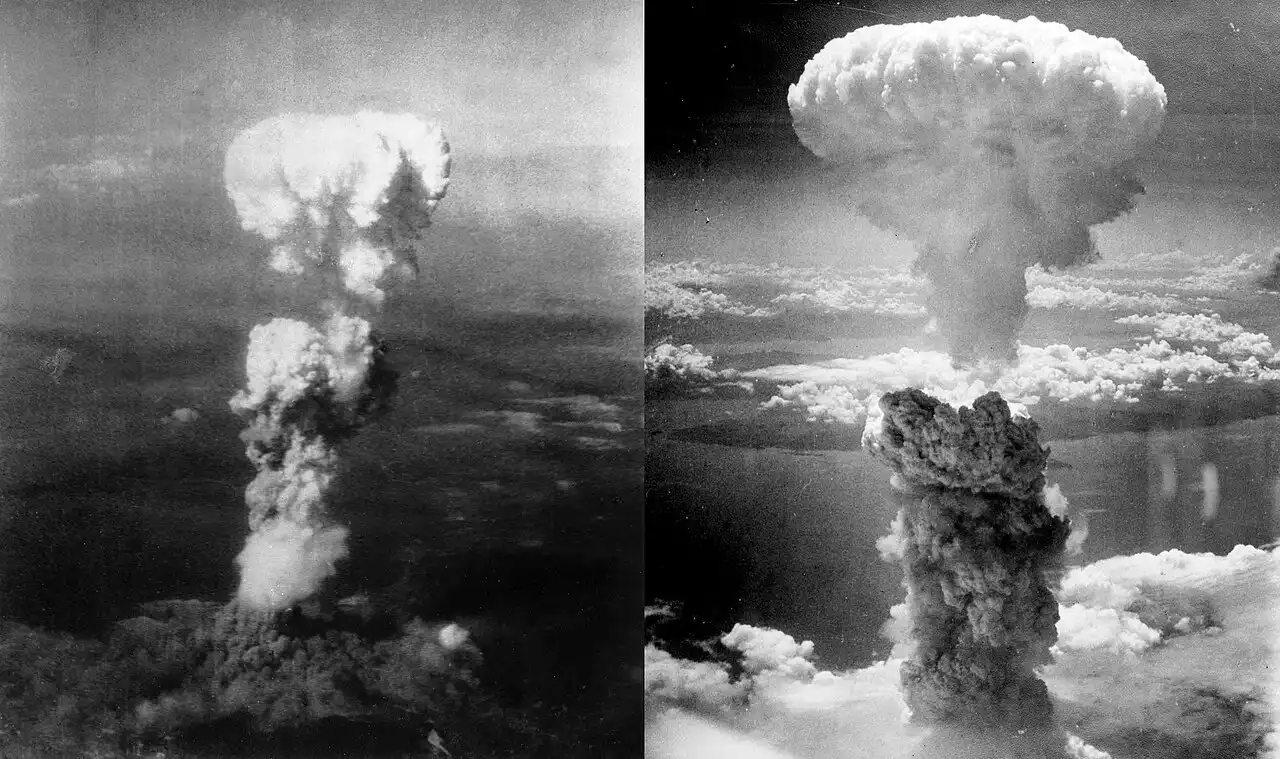
The American bomber Bockscar had just dropped Fat Man. Yamaguchi’s workplace once again put him about two miles from ground zero. This time, the blast did not physically injure him. But the explosion destroyed the building around him and left him without working bandages, and he developed a high fever and vomited continuously for more than a week.
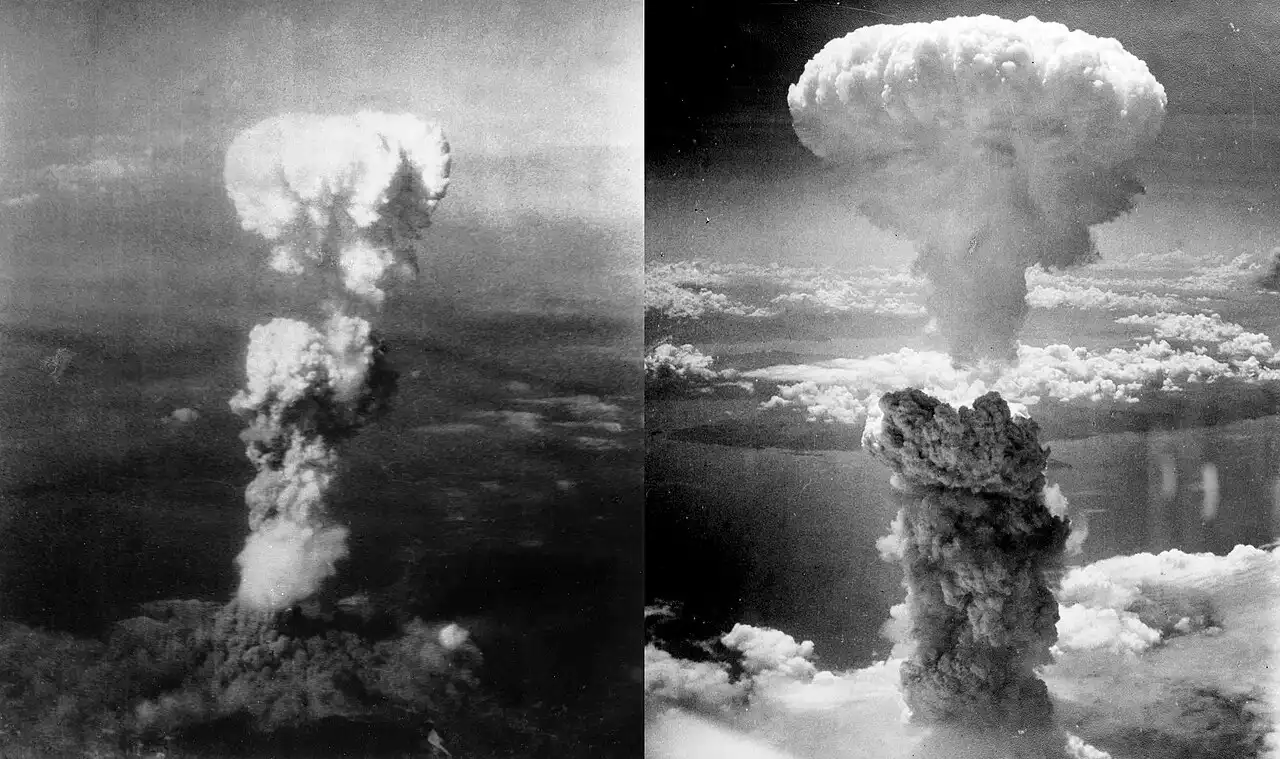
He had now been at the center of both attacks, three days apart, in two different cities. I’ve typed that sentence a few times and it still doesn’t sound real.
The bomb that hit Nagasaki was meant for another city. Cloud cover over the original target sent the plane to its backup, and Nagasaki was the second choice. Yamaguchi’s hometown was destroyed almost by accident.
What Did It Cost Him Over a Lifetime?
He lived to 93, but his family paid a heavy price. That’s the part the “luckiest unlucky man” framing usually skips. Yamaguchi survived, and he was healthy for many years. Later in life, he developed cataracts and acute leukemia, both tied to radiation exposure.
His wife Hisako was also a Nagasaki survivor. She died in 2008 of liver and kidney cancer, which the family attributed to her radiation exposure. All three of their children had serious health problems throughout their lives, which may also have been due to their parents’ contact with the bombs.
For a long time, Yamaguchi barely spoke about what happened. He was grateful to be alive, he put it behind him, and when the government gave him survivor status in 1957, his papers listed only Nagasaki. That was fine by him. He felt reasonably well plus he had a family to raise.
Why Did He Finally Speak Out?
Because in his old age he came to see his survival as a duty, not just luck. In his eighties, he wrote a memoir, A Life Well-Lived, and a book of poetry. Then in 2006 he appeared in a documentary about the 165 known double survivors, titled Twice Survived, and it was shown at the United Nations.
At that screening, he called for the abolition of atomic weapons. He became one of the most recognizable voices for nuclear disarmament in Japan, a living argument against the thing that had tried twice to kill him. He said he hated the bomb not for what it did to buildings but for what it did to the dignity of the people under it.
In 2009, he applied for official recognition as a survivor of both bombings. The government granted it in March, making him the first and only person confirmed as a double hibakusha. He said his double exposure was now a matter of official government record, and that it would carry the story of what happened to the next generation long after he was gone.
He died of stomach cancer on January 4, 2010, at 93. He had only learned of this diagnosis the year before.
Why the “Luckiest Unlucky Man” Label Is Wrong
Because he wasn’t lucky, and he wasn’t unlucky. He was a witness, and he chose to make that count. The famous nickname comes from a 2010 British TV comedy segment that treated his story as a punchline, complete with jokes about whether the bomb had bounced off him. It drew protests from his family and from the Japanese embassy in London, and the BBC ended up apologizing.
His daughter responded on national Japanese television. She said she could not forgive the bombing being turned into a joke, and that it showed how little of the horror the world still understood. She said she felt sad more than angry.
That’s the real reason this particular story belongs in a category about astonishing things. It isn’t a curiosity. It’s a man who was given the worst possible view of the twentieth century, twice, and spent his last decades trying to make sure we didn’t have to see it a third time.
What I Take From It
Statistically, Yamaguchi should not exist. The odds of being close enough to two separate nuclear blasts to be counted among the survivors are so small they read like a rounding error. And yet the entire chain of events hangs on one tiny piece of ordinary life: a man forgetting his ID stamp and turning back for it.
I don’t think that makes him lucky. I think it makes him a reminder of how much of any life turns on nothing at all. A few steps one way, a folded piece of paper left on a desk, and history reaches out and touches you. We talk about survival as if it’s something you earn, the way we talk about good luck and bad luck. Often it’s just where you happened to be standing.
Thanks for reading. The next time you misplace something small and have to double back for it, spare a thought for what that little delay did in the hands of one man in 1945.