Try it now. Go back as far as you can and find the earliest thing you genuinely remember, not a photograph you have seen or a story your mother told at dinner. For most people the answer is a fragment: a carpet, a doorway, the feeling of being carried. Almost nobody can put a date on it earlier than their third birthday.
Which is odd, when you think about how much happened before that. You learned to recognize faces, to crawl, to walk, to understand a language, to argue about what you wanted. You were there for all of it. And almost none of it survived…
Why Can’t You Remember Being a Baby?
Probably not because the memories were never made. More likely because you can no longer reach them. The evidence for that’s the interesting part of this, and it comes from two places that rarely get put side by side: experiments on babies, and experiments on rats. Both suggest that a very young brain records something real, and then loses the route back to it as the brain rebuilds itself around the memory.
The Line Falls Around Your Third Birthday
Psychologists have been measuring this since the nineteenth century, and the answer has barely moved. Caroline Miles formally described the phenomenon in the American Journal of Psychology in 1895, in a paper on individual psychology. Within a few years, Henri and Henri had surveyed people about their earliest recollections and arrived at an average age of three years and one month. G. Stanley Hall noted it in his enormous 1904 book on adolescence. Freud gave it a famous explanation in 1910, and although his explanation didn’t survive, his name for the thing did: infantile amnesia.
Later work has refined the edges without moving the center. Most adults land somewhere between three and four. Some reach back to two and a half with a fragment. The period between three and six tends to be patchy rather than empty, and autobiographical memory looks roughly adult by the age of five or six. The exact cut-off depends on how you ask, which is its own small lesson about memory: a cued question and a free question produce different answers, because a cue does some of the retrieving for you.
Babies Are Not Recording Nothing
A two month old can learn something and remember it days later. The memory works. It just doesn’t work the way yours does now. The classic demonstrations train an infant to kick a leg to move a mobile, then bring them back into the same room later to see whether they kick without prompting. They do, for a while. The interval they can manage grows steadily with age, from a day or two up to weeks. Children tested on events that happened before their second birthday can recall them with about fifty percent accuracy, while adults asked the same question remember close to nothing.
So the ability is present well before the memories become reportable. What’s missing isn’t storage but the particular kind of storage that survives into adulthood: a memory with a context, a place, a sequence of events, and a self sitting in the middle of it, watching.
The Filing System Was Still Being Built
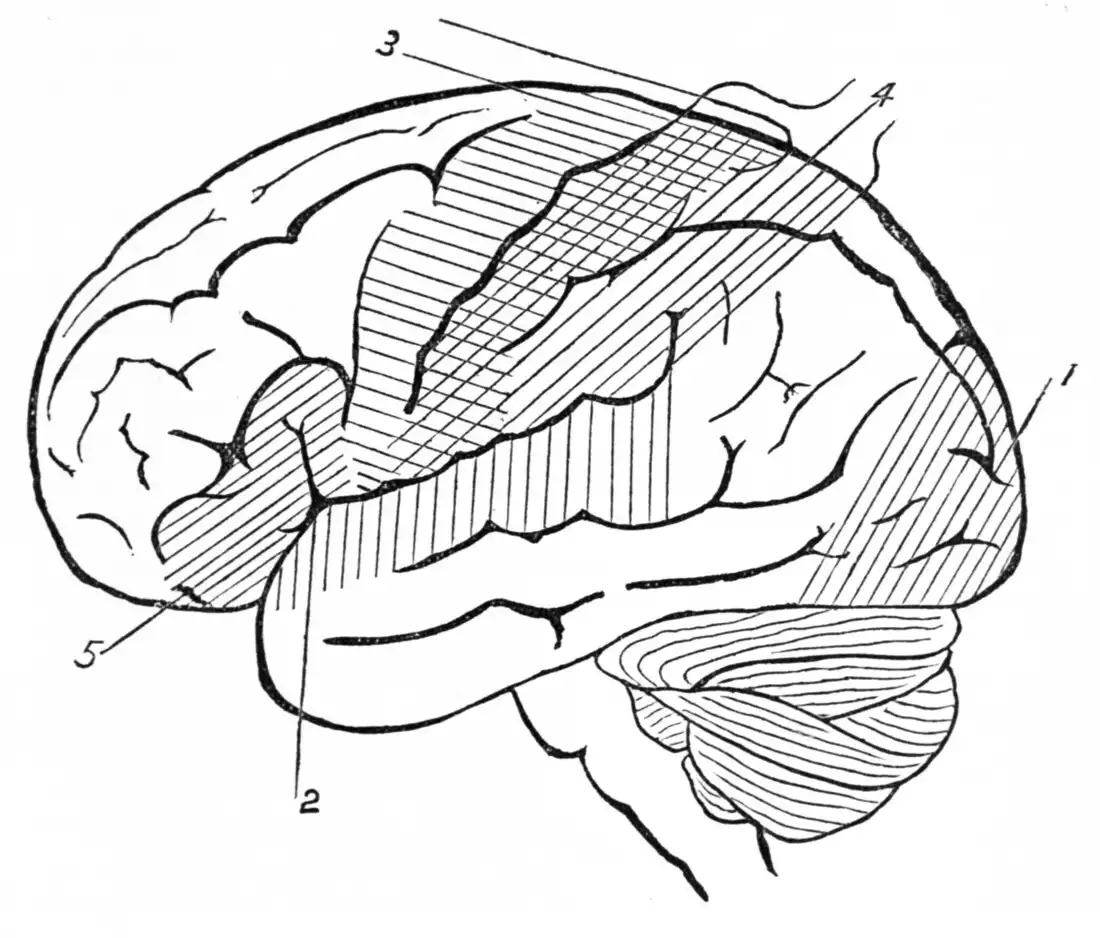
The leading explanations all point at the same idea: the parts of the brain that assemble an episode weren’t finished. The hippocampus, which ties the pieces of an experience into a single retrievable event, matures slowly through early childhood, and the prefrontal cortex, which handles the organizing and the sense of self that goes with a memory, matures even later. Some researchers argue that children can’t form context-rich memories at all until around the age of four, which would explain why the fragments people do recall from earlier are usually images or feelings with no story attached to them.
The comparison that makes this click is dreaming. Most dreams dissolve within minutes of waking, not because the dream was never experienced, but because the conditions that would let you file it aren’t present when it happens. The machinery that makes a memory durable isn’t the same machinery that makes the experience.
A Rat, a Reminder, and a Memory That Came Back
Infant rats forget a frightening room faster than adult rats do, and a single reminder before the test is enough to bring the memory back. That result matters more than it sounds. If the memory were gone, no reminder could restore it. Something must have been stored and then become unreachable, and the reminder restored the route rather than the content. The same pattern shows up in human infants: a behavior that would normally be forgotten within days can be recovered if the infant meets the cue again before the test.
Two conclusions follow, and they pull in different directions. First, this isn’t a uniquely human problem. Rats, mice and several other species show the same pattern, which rules out explanations built entirely on language or on having a sense of self, because a rat has neither in the sense we mean. Second, the word “forgotten” is doing a lot of work in ordinary conversation. There’s a difference between a memory that no longer exists and a memory that exists but has lost its address.
The age of your first memory isn’t fixed by biology alone. Women tend to report earlier first memories than men, and the gap seems to come from how parents talk to children about the past: mothers tend to tell longer, more detailed and more emotional stories to daughters than to sons, and children who hear that style end up with richer early memories of their own.
Language Arrives and Rewrites the Archive
One influential idea is that learning to speak quietly deletes everything that was recorded before you could. A memory laid down without words has nothing to hang on when the verbal system takes over, so the preverbal part fades and only the sensory scraps remain. That would explain why the earliest memories people report are so often a texture, a smell or a shape rather than a scene with dialogue in it.
The cultural evidence fits. In a study comparing groups, Chinese participants reported later first memories than New Zealand European or Maori participants, and the effect was driven almost entirely by Chinese women, whose average first memory was around six point one years. The suggested reason isn’t neurology but conversation: in a culture that prizes sons over daughters, parents may tell richer, more elaborative stories to boys, and the children who hear those stories build earlier and denser memories. Memory, in other words, is partly a thing other people do to you.
How Far Back Can You Actually Go?
What I find genuinely strange is that the answer to “what’s your earliest memory” isn’t a fact about your infancy. It’s a fact about your family, your language, and how much of your childhood was narrated back to you by someone who was there. You’re remembering a story about yourself that other people helped you write, and the earliest pages have gone missing because nobody was writing them down yet.
It also means the memory you just retrieved is probably not your first. It’s the earliest one that survived both the rebuilding of your brain and the retelling of your childhood, which is a much narrower filter than it sounds…
So go on then. What’s the earliest thing you can actually see in your head, and how old were you when it happened?