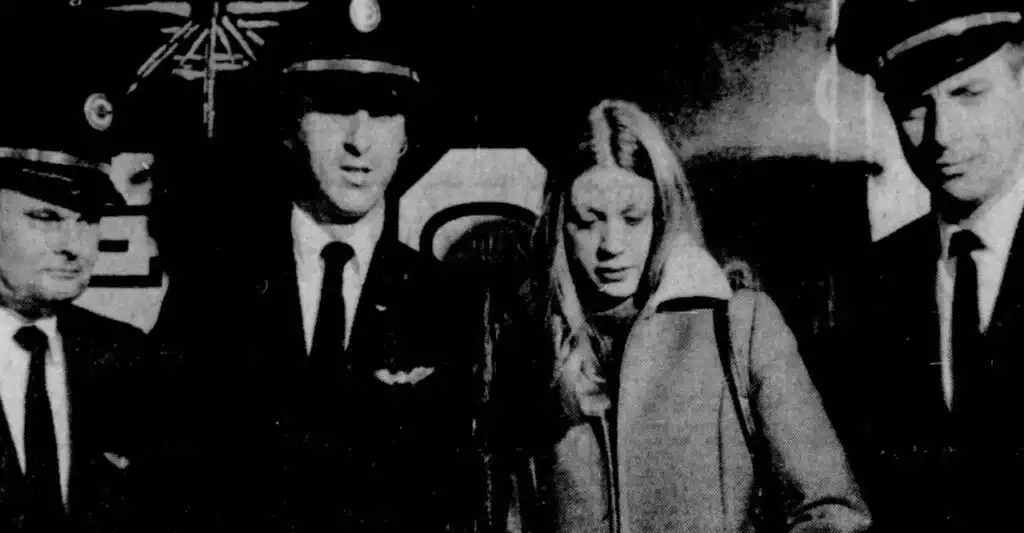
On the evening before Thanksgiving in 1971, a man in a dark suit and a black raincoat walked up to the Northwest Orient desk at Portland airport, paid cash for a one way ticket to Seattle, and gave the name Dan Cooper. Half an hour into the flight he handed a note to a flight attendant and told her he had a bomb.
Five hours later he stepped out of the back of a Boeing 727 into the dark somewhere over southwest Washington, with two hundred thousand dollars strapped to him, and was never identified. It’s the only hijacking of a commercial airliner that has never been solved.
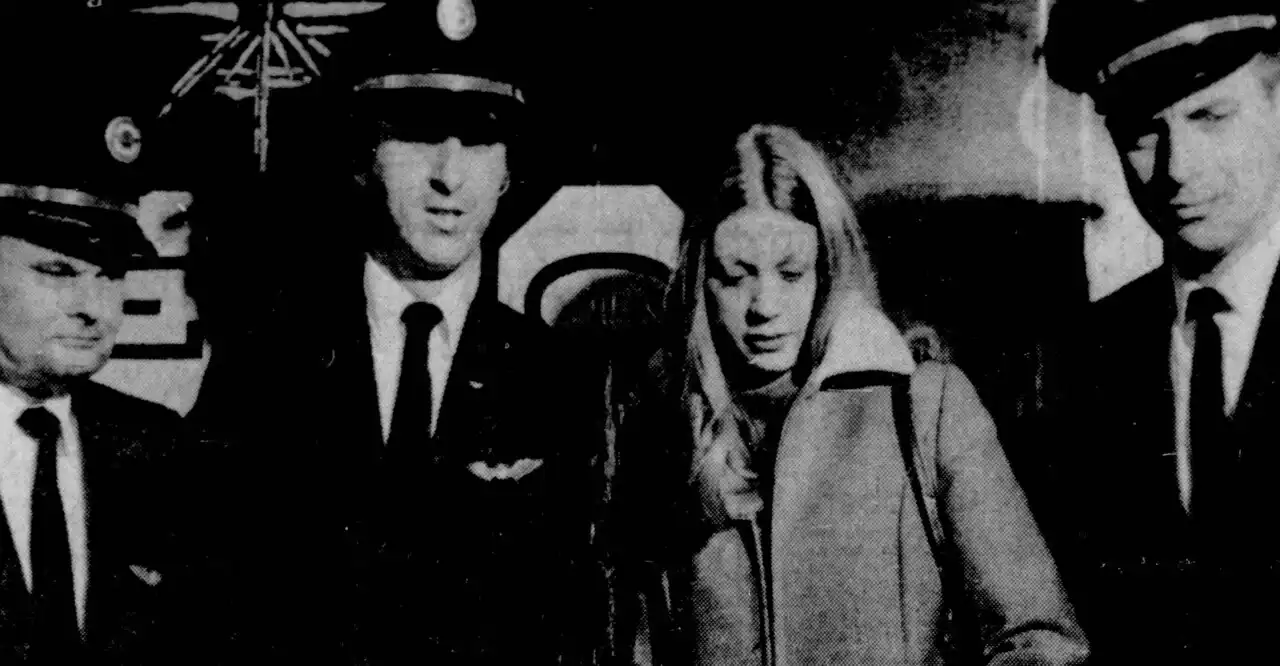
Who Was D. B. Cooper?
Nobody knows, and that includes the name. The man called himself Dan Cooper. A reporter misheard or mistyped it as D. B. Cooper, the error was printed, and the wrong name attached itself to the case permanently. Every headline, book and documentary since has used a name the hijacker never gave.
Which is a fitting start for a story about a man who was described in detail by everyone who met him and identified by not one of them.
Thanksgiving Eve, 1971
Flight 305 was a short hop from Portland to Seattle, and it left on schedule at 2:50 in the afternoon with 36 passengers and a crew of six. The man in seat 18C had paid twenty dollars in cash for his ticket on the day, listing the name Dan Cooper, and eyewitnesses later described a white man in his mid forties with dark hair and brown eyes.
Shortly after takeoff he handed a note to flight attendant Florence Schaffner, strapped into the jump seat just behind him. She assumed it was a phone number from a lonely businessman and put it in her pocket without reading it. He leaned over and told her she had better look at it.
In neat block capitals, printed with a felt tip pen, the note told her he had a bomb in his briefcase and that she should sit beside him. She did. When she asked to see it, he opened the case and showed her a large cylindrical battery wired to two rows of four red cylinders that she took to be dynamite.
Two Hundred Thousand Dollars and Four Parachutes
His demands were specific and, in the circumstances, oddly polite. Two hundred thousand dollars in a knapsack, two front parachutes and two back parachutes, delivered when the aircraft landed in Seattle. He would release the passengers once he had the money. The parachutes were to be the last thing brought aboard.
The plane circled Puget Sound for about two hours while the airline and the FBI assembled the ransom. Donald Nyrop, who ran Northwest, authorized the payment and told employees to comply. The passengers were told there was a minor mechanical difficulty, and when the aircraft finally landed they were let off without knowing how close they had come to something worse.
One detail from that leg is worth keeping. Cooper asked flight attendant Tina Mucklow to stay beside him throughout, and at one point, looking out of the window at the city below, remarked that it looked like Tacoma down there. He was right. She later said he wasn’t nervous, that he seemed rather nice, and that he wasn’t cruel. He also knew that McChord Air Force Base was only about twenty minutes by road from Sea-Tac, which isn’t the kind of thing a first time hijacker tends to know.
The Jump
KEEP and took off again, bound for Mexico City with a planned stop in Reno. Somewhere over the remote, heavily wooded country of southwest Washington, Cooper opened the aft door, lowered the airstair and jumped.The 727 had a rear staircase that could be deployed in flight, which was part of why this hijacking worked at all, and part of why several copycats tried the same thing the following year. The crew, sealed in the cockpit as instructed, felt a change in the aircraft’s behavior and later found the door open and the cabin empty.
He’d asked for a route and an altitude that suited a parachute jump, he had four chutes to choose from, and he went out over forest at night in November. Whether that was courage, technique or a plan that had already gone wrong is the question the case has never answered…
The Money in the Sand
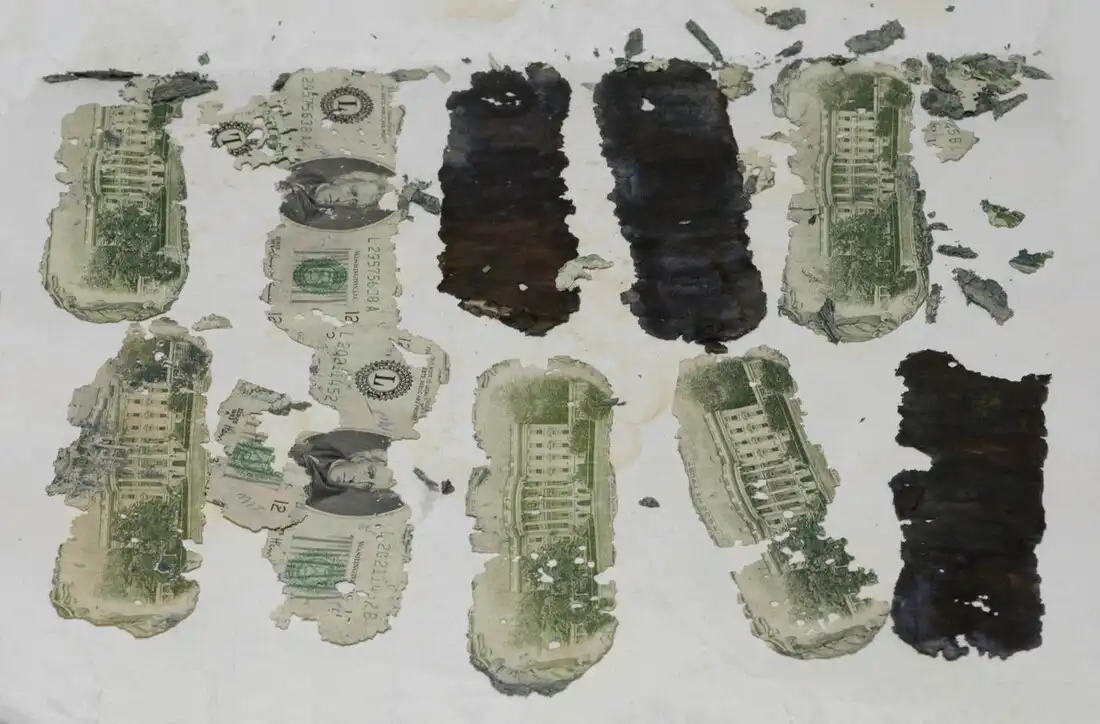
In 1980 a boy playing on the bank of the Columbia River near Vancouver, Washington, found a bundle of the ransom money. Just under six thousand dollars of it, in rotting twenty dollar notes, buried in the sand and discolored by it.
The serial numbers matched. That’s the only piece of D. B. Cooper that has ever been recovered, and it arrived nine years late and told investigators almost nothing except that some of the money had gone into the river rather than into a bank account.
Everything else is inference. The FBI maintained an active investigation for about forty five years, built one of the most famous case files in American law enforcement, and closed it in 2016 without ever naming a suspect it could stand behind. Over the decades the bureau interviewed suspects in the plural, chased confessions from men on their deathbeds, and tested a clip on necktie left on the aircraft against everything anyone could think of.
Did you Know?
He left the tie behind. A thin black clip on necktie was found on the aircraft after the jump, and because he had worn it for hours it carried microscopic traces of whatever he had been near. Decades of analysis produced particles that pointed in a few directions and settled none of them, which is the story of this case in a single object.
Did He Survive?
Many investigators concluded he probably didn’t, and the argument is about the jump rather than the man. Stepping out of an airliner at night, in November, in ordinary business clothes, over forested mountains, with a parachute he had never packed and couldn’t inspect properly, isn’t an activity that leaves much margin. A second parachute was provided for the money bag, and rescuers later noted that at least one of the chutes supplied was a training rig that wouldn’t have been usable.
Against that, someone planned this well enough to know the airstair, the flight profile and the airfield distances. A man that careful might have worn a reserve chute under his coat, and might have had a car waiting within walking distance of where he expected to land. Five decades of searches across the Pacific Northwest have produced no parachute, no body and no arrest.
What He Changed
The practical legacy is the security queue you stand in. Before 1971, American airports didn’t routinely screen passengers or their bags. Metal detectors went in afterwards, baggage inspection became normal, and anyone paying cash for a same day ticket started attracting a second look. Two hundred thousand dollars, one parachute and a felt tip pen changed the way an entire industry moved people.
The Case That Refuses to Name a Man
There’s a temptation to treat D. B. Cooper as a folk hero, and the case invites it, because the whole thing was bloodless and the escape so audacious. I find that reading a bit thin. He put a bomb in front of a young woman, held a planeload of people at gunpoint in effect, and disappeared. What makes him interesting isn’t charm but completeness: he is the one who got away, and the record has never been able to close around him.
The comparison that keeps coming back is with the sea. A ship found drifting with the crew gone, an aviator who flew past her island into nothing. In each case the vehicle survives and the person doesn’t, which is exactly backwards from how we expect a disaster to go.
So here is what I would like to know. Do you think he walked out of that forest, or is he still somewhere in it waiting to be found by somebody walking a dog?