If you have heard of a skinwalker, you have almost certainly heard of it from someone who wasn’t Navajo, in a story that wasn’t told the way it’s told at home. That isn’t a small detail. It’s the most important thing about the subject, and it explains why the version in your head keeps drifting away from the version in the culture it comes from.
What Is a Skinwalker?
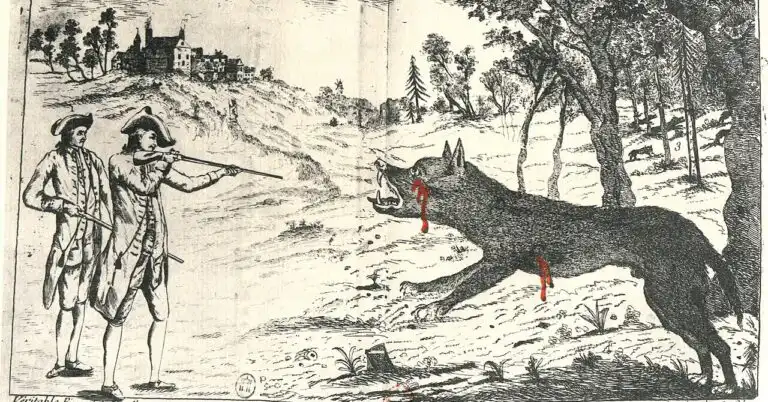
In Navajo belief, a skinwalker is a kind of harmful witch who can take an animal’s shape, wear one, or put on an animal’s appearance. That’s the whole definition, and it’s shorter than most people expect because the popular version has accumulated so much. It isn’t a species. It isn’t a cryptid with a habitat and a diet. It’s a person who has chosen to do something the culture regards as a profound betrayal, and the animal shape is a symptom of that choice rather than the point of it.
The Word Says Exactly What It Does
The Navajo term most often translated this way is yee naaldlooshii, and the sense of it is travel: the thing moves about on four legs, by means of something. The name points at the method rather than the beast: something is used, and the traveling happens on four legs. That’s a construction that makes sense inside a language where the mechanics of a thing matter, and it should tell you something about how far the English word has traveled from the original.
Skinwalker is an English approximation, a description rather than a translation, and approximations are where meaning leaks. When a term moves into another language it tends to arrive stripped of the framework that made it make sense, and then it gets used for whatever looks similar over here.
One Kind Among Several
Yee naaldlooshii is one variety among several kinds of Navajo witch, and specifically a type of ‘ánti’įhnii. The English word flattens all of that into a single spooky noun. Within the tradition these are distinct categories with distinct practices, and the distinctions matter the way the difference between a burglar and a fraudster matters.
The framing that gets lost most often is the moral one. Witches in Navajo belief are the antithesis of the values the culture is built on. Medicine people and healers sit on the other side of that line, doing work that protects the community, and the term skinwalker is never used for a healer. This is a story about what a person becomes when they turn against their own people, wearing an animal shape as the visible sign of it.
Why the Full Story Isn’t Available
Because talking about it’s discouraged, and that isn’t a marketing strategy. Traditional Navajo people are reluctant to discuss skinwalker lore with outsiders, or sometimes at all among people they don’t trust, and the subject carries a real cultural prohibition. The Cherokee academic Adrienne Keene has made the point that outsiders typically lack the cultural context the stories are embedded in, which is a polite way of saying that a story told out of context isn’t the story.
This creates an unusual problem for anyone writing about it, including me. The usual investigative move, which is to collect versions and look for the common thread, is precisely the move the tradition is asking you not to make. And the absence of information isn’t evidence that there’s nothing behind it. It’s evidence that a living culture has rules about what gets repeated, and those rules are worth more than the article you were about to write.
The Shape of the Navajo Stories
Told among Navajo children, the stories come in a few recognizable shapes, and the shape is as informative as the content. Some are complete struggles that end with one side killing the other. Others are partial encounters that end in a stalemate. There is also a category of victory story in which a skinwalker approaches a hogan and is driven away.
Notice what those have in common. The person being threatened is at home, inside a structure, defending a household. The threat arrives from outside and is answered by the household holding its ground. That’s a story about a community protecting itself from someone who has left it, and it lands very differently from a tale about a lone traveler being chased down a road at night.
The Version You Probably Heard Is a Different Shape
The version that circulates outside the culture is usually a road encounter, where the protagonist is briefly vulnerable and then escapes. That isn’t a Navajo story shape. It’s a familiar European and American one, and once you know that, you can’t stop noticing it.
There is even a documented case of the borrowing running the other direction. Navajo children have been known to take European folk tales and substitute a skinwalker for a generic killer, in the same way children everywhere refit a story to the monsters they actually have. The traffic goes both ways, and the version with the widest reach ends up looking like the authentic one simply because more people have heard it.
How a Belief Became a Ranch and a Budget Line
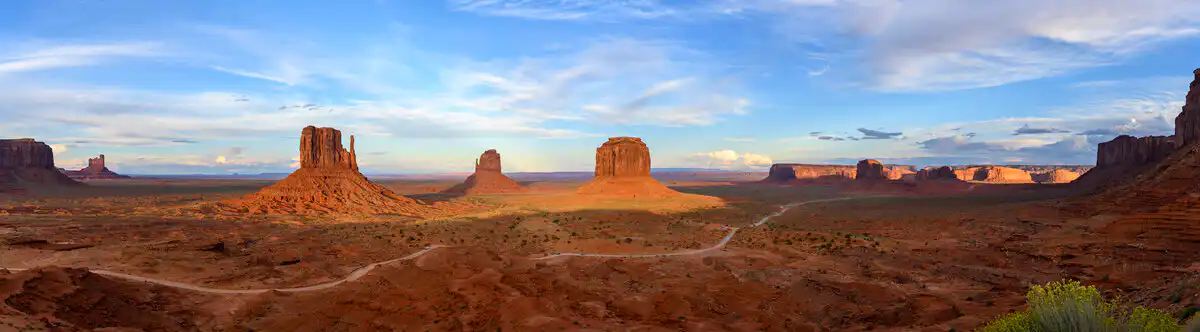
In 1996, a series of newspaper articles gave the name to a property in Utah, and from there it went somewhere no folk story usually gets to go. Skinwalker Ranch, previously the Sherman Ranch, is about 512 acres southeast of Ballard, in west Uintah County, on the border of the Uintah and Ouray Indian Reservation. George Knapp reported the family’s claims of strange events in the Deseret News, and the name was borrowed from the Navajo legend even though the land is Ute country.
Robert Bigelow, who founded the National Institute for Discovery Science, bought the property for two hundred thousand dollars in 1996 to study the reports. In 2005, Colm Kelleher and Knapp published Hunt for the Skinwalker, describing cattle deaths, lights, orbs, polka dots and other phenomena. That book reached a Defense Intelligence Agency official named James Lacatski, who visited the ranch, had an experience there that he described as significant, and the story then traveled up through Bigelow to Senator Harry Reid. Reid and Ted Stevens agreed the subject deserved attention, and a line went into the Department of Defense budget appropriating twenty two million dollars to study it.
That’s one of the more remarkable sequences in modern American folklore. A concept from Navajo belief became a brand for a Utah property, then a book, then a Pentagon program, and eventually a television series. At no point in that journey did the Navajo framework come along with it.
The Question Worth Asking Instead
People arrive at this subject wanting to know whether skinwalkers are real, and that’s the least interesting question available, partly because it can’t be answered and partly because it’s the one the tradition has already declined to entertain. Whether a being that changed shape escaped into the dark isn’t a question an outsider can settle by reading.
The better question is what the belief does inside the culture that holds it. It marks a boundary between people who keep their obligations and people who don’t. It gives a community a way to talk about betrayal, secrecy and harm without naming a neighbor. And it requires restraint from the people who know the most, which is the opposite of how information usually behaves.
Which leaves a slightly awkward ending for a post like this. The most accurate thing I can tell you about skinwalkers is that I’ve been told less than I would like, deliberately, by people whose reasons are better than my curiosity…
So I will ask the gentler version of the question. What is the local legend where you grew up, the one you were warned about but never supposed to ask too much about?