On a cold February morning in 1910, six people dressed themselves up as an Abyssinian royal delegation and talked their way aboard the most powerful warship in the world. The navy flew the wrong flag, played the wrong anthem, and saluted them. And the story only gets better from there, because hiding inside the costumes were one of the greatest writers of the century and a set of friends who were doing it for the sheer joy of nonsense.
This is the Dreadnought hoax, the prank that made the mightiest fleet on earth look like a joke. It is silly, it is clever, and it says a lot about how far confidence can carry a person.
Who Were the Hoaxers?
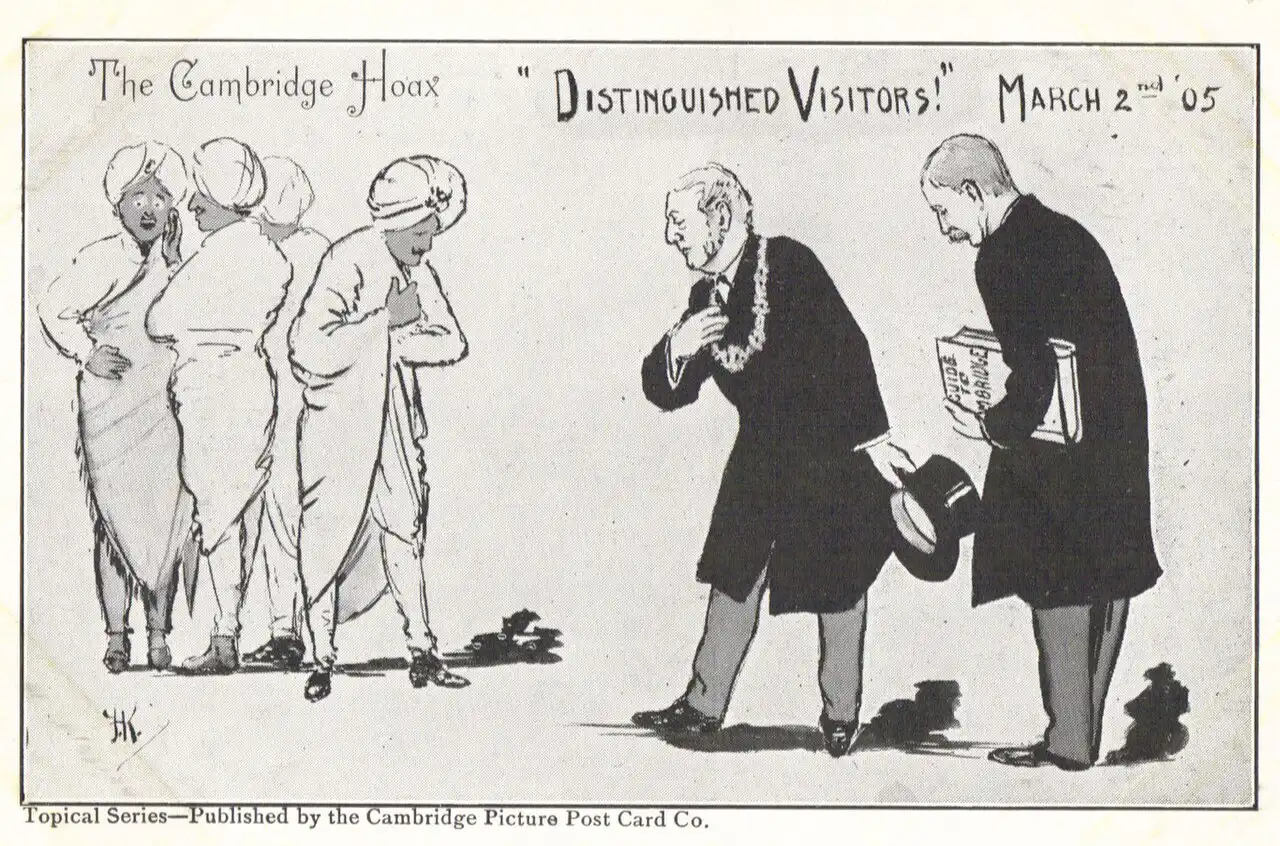
A small group of friends led by an eccentric Irish prankster named Horace de Vere Cole. Cole had already pulled off an earlier version of the same trick in 1905, when he and some friends, including a young man named Adrian Stephen, dressed up as the Sultan of Zanzibar and visited a ship at Cambridge. Five years later, they decided to aim much higher.
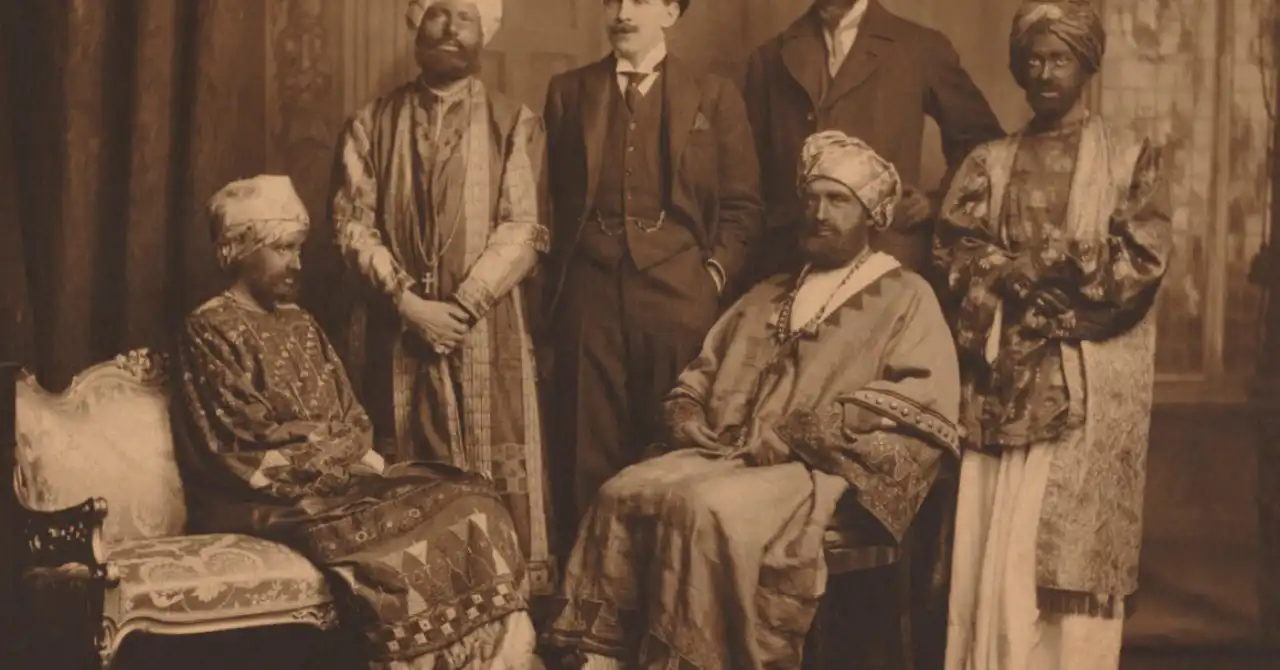
The group was Cole, Adrian Stephen, his sister Virginia Stephen, who would later become the novelist Virginia Woolf, and three others, Guy Ridley, Anthony Buxton, and the painter Duncan Grant. A theatrical costumier decked them out in robes and turbans, and added skin darkener and, famously, false beards held on with theatrical glue. Adrian, who spoke no foreign languages at all, was cast as the interpreter, because his height made him the most convincing royal.
How Did They Get Aboard?
One well-forged telegram and a lot of nerve. Cole sent a telegram to the navy claiming to be from the Foreign Office, announcing that the Prince of Abyssinia and his suite would be arriving at Weymouth that afternoon. Posing as a Foreign Office official named Herbert Cholmondeley, he arranged a special VIP train from London, complete with the correct-seeming courtesies.
When the party reached HMS Dreadnought, the flagship of the Home Fleet, the navy rolled out the red carpet. Since the navy did not have Abyssinian flags on hand, they flew the flag of Zanzibar instead, and a band played the Zanzibar anthem. The visitors inspected the ship and asked respectful questions. The “royal family” tried to bless various officers with fake honors, and asked for prayer mats.
Their gibberish, a mix of Latin and Greek, fooled everyone, including one Commander Willie Fisher, who happened to be the Stephens’ own cousin and still did not recognize them. At one point the visitors began chanting a nonsense phrase, which they invented on the spot to sound convincingly foreign. The phrase was bunga bunga.
How Did It Come Out?
Cole told on himself, because a prank nobody knows about is no fun at all. The navy was furious, but the awkward truth was that no law had actually been broken. In the end, several of the hoaxers, with Virginia Woolf reportedly among the exceptions, were symbolically thrashed by junior naval officers, which sounds like a punishment but was taken as one more joke.
Cole leaked the story to the press and even sent a photograph to a newspaper, which is how we have the famous image of the fake Abyssinian royals. The navy demanded action, the country laughed, and the whole thing turned into one of the most beloved pranks in British history.
Five years later, the Dreadnought went on to ram and sink a German submarine, becoming the only battleship ever to sink one. The telegraph of congratulations that arrived for the crew read, simply, bunga bunga. The navy had adopted the hoax’s nonsense phrase as its own private joke.
What Was the Big Deal About the Dreadnought?
She was the most fearsome warship afloat, and that is exactly why the navy hated being made a fool of on her deck. Launched in 1906, HMS Dreadnought was so far ahead of everything before it that an entire generation of battleships was named after her. Old ships were suddenly “pre-dreadnoughts,” obsolete overnight. She was the floating symbol of British naval supremacy, the thing a rival fleet saw in its nightmares.
Which means the hoaxers didn’t just prank a ship. They pranked the single most important symbol of the British Empire’s pride, and they did it in front of the officers responsible for keeping the sea safe. No wonder the Admiralty wanted someone’s head.
There’s a lovely coda to all of this. Virginia Woolf went on to lecture about the prank in 1940, and her brother Adrian wrote his own account of it in 1936. So the fake Abyssinian royals eventually got their memoir, just thirty years late, and with rather better prose than their “Abyssinian” ever deserved.
What Does the Dreadnought Hoax Teach Us?
That authority is a costume, and a confident one can get you almost anywhere. The hoax worked not because it was technically brilliant, which it was not, but because everyone involved assumed the arrangement must be legitimate. The telegram looked official, the Foreign Office name sounded right, and so nobody asked the obvious questions. They were handed a fantasy and they saluted it.
You can see the same confidence trick at work in the great Moon hoax of 1835, where a newspaper made a fiction feel like fact. The props change. The mechanism never does.
Virginia Woolf went on to change the modern novel, and she told this story for the rest of her life. Of all the things she ever wrote, the one that traveled across the world was a fake Abyssinian prince asking for a prayer mat…